Star cluster & reflection nebula
The Pleiades
M45 — bright stars wrapped in borrowed blue light

- Captured
- 16 October 2026

- Captured
- 16 October 2026
1 of 2: Close view
What is it?
An open cluster: a group of stars born together. The Pleiades are also called the Seven Sisters, although the cluster contains many more stars than the few that stand out to an unaided eye.
What can you see?
The bright blue-white stars are surrounded by wisps of blue haze. That haze is dust scattering their light — a reflection nebula.
Why is this different from a red nebula?
Here, dust redirects light that a star has already produced. In an emission nebula, gas itself emits light after receiving energy. The distinction changes which filters help: a narrow gas-emission filter can discard much of this reflected starlight.
Behind the photo · optional experiment
Borrow a little blue starlight
Follow white starlight through dust. Add grains and see scattered blue light leave the direct beam towards a different viewpoint.
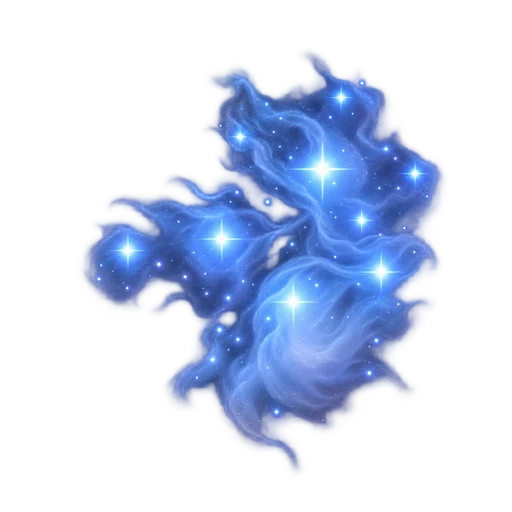 Journey illustration · not a photograph
Scatter the starlight
This experiment changes the physics or the viewpoint. Your photograph stays as the reference observation.
Open the full Lab view ↗