An alternate way into the atlas
Follow the light
Every photograph arrived at Earth as light. Travel with us as we follow it back towards its source.
↓ S outward · ↑ W home · ← A → D steer
Miniatures are illustrations; side images are my photographs. Distances are real. Travel gaps and sideways positions are compressed.
Preparing the rocket…
A journey through the atlas
Follow the light
Travel with us from Earth to the oldest light photographed here. The interactive flight needs WebGL and JavaScript; every stop is available below.
Landmark
Earth
You are here · The journey starts now
Every photograph in this atlas arrived here as light. Travel with us as we follow it back towards its source.
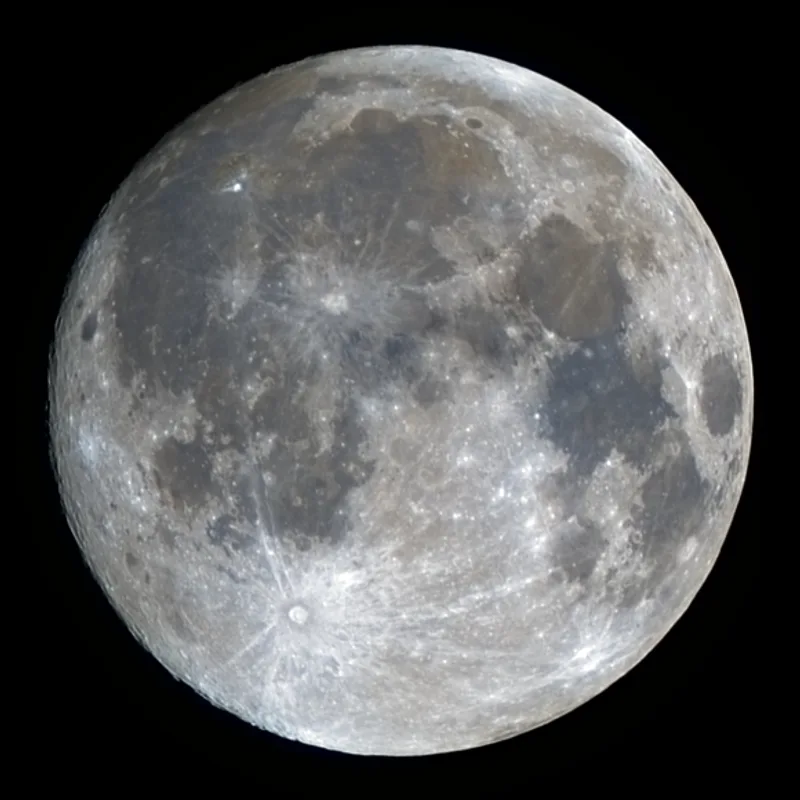
Natural satellite
The Moon
384,400 km · 1.3 light-seconds
This is the nearest photographed stop: sunlight reflected from the Moon, a little over one second away at its average distance.
Open the photograph →Landmark
The Sun
150 million km · 8.3 light-minutes
The star that lights our days. The sunlight reaching Earth now left its surface about eight minutes ago.
Landmark
Voyager 1
25.6 billion km · 24 light-hours
The most distant spacecraft from Earth, still sending a faint radio signal home.
Landmark
Alpha Centauri
4.37 light years · 4.37 years of light travel
The closest star system to the Sun. Even its light takes more than four years to reach us.
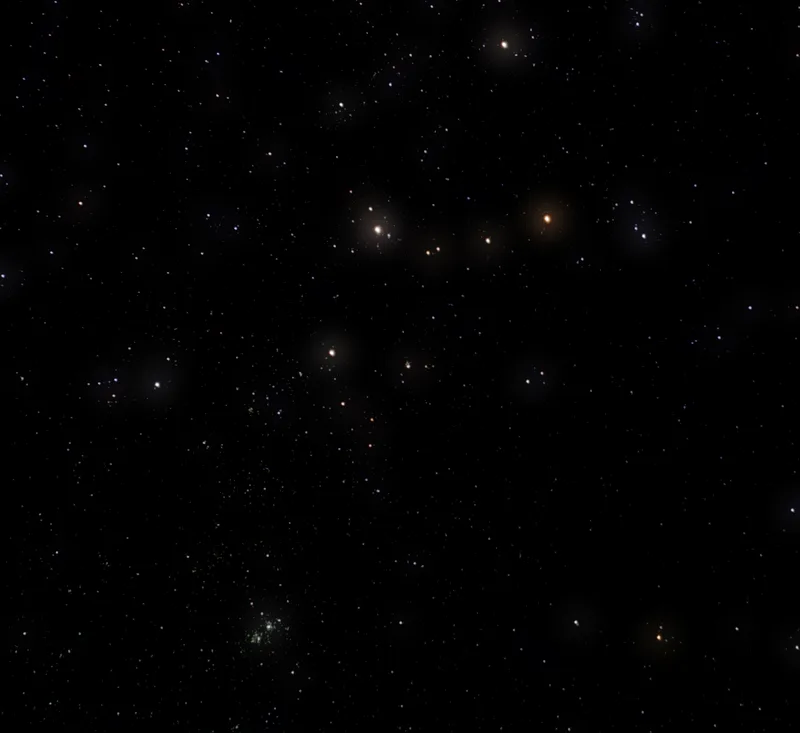
Constellation
Cassiopeia’s W stars
55–550 light years · Light left between 1476 and 1971
This distance range covers only the five main W stars. They lie at different depths, about 55–550 light years away. The Double Cluster in the wider photo is much farther away, about 7,500 light years.
Open the photograph →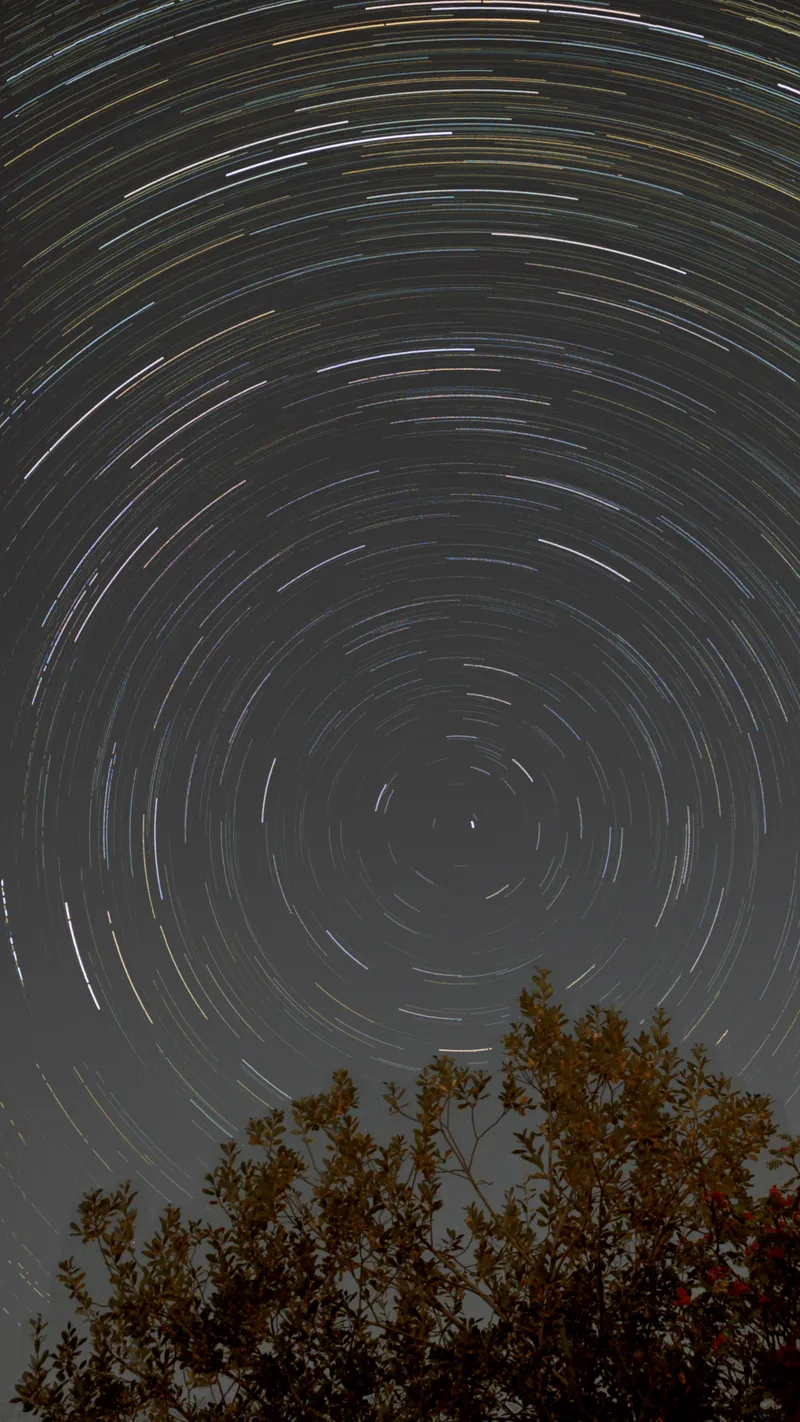
Star trails
Around Polaris
430 light years · 430 years of light travel
The reference distance here belongs to Polaris alone. The other trails come from stars scattered across many distances.
Open the photograph →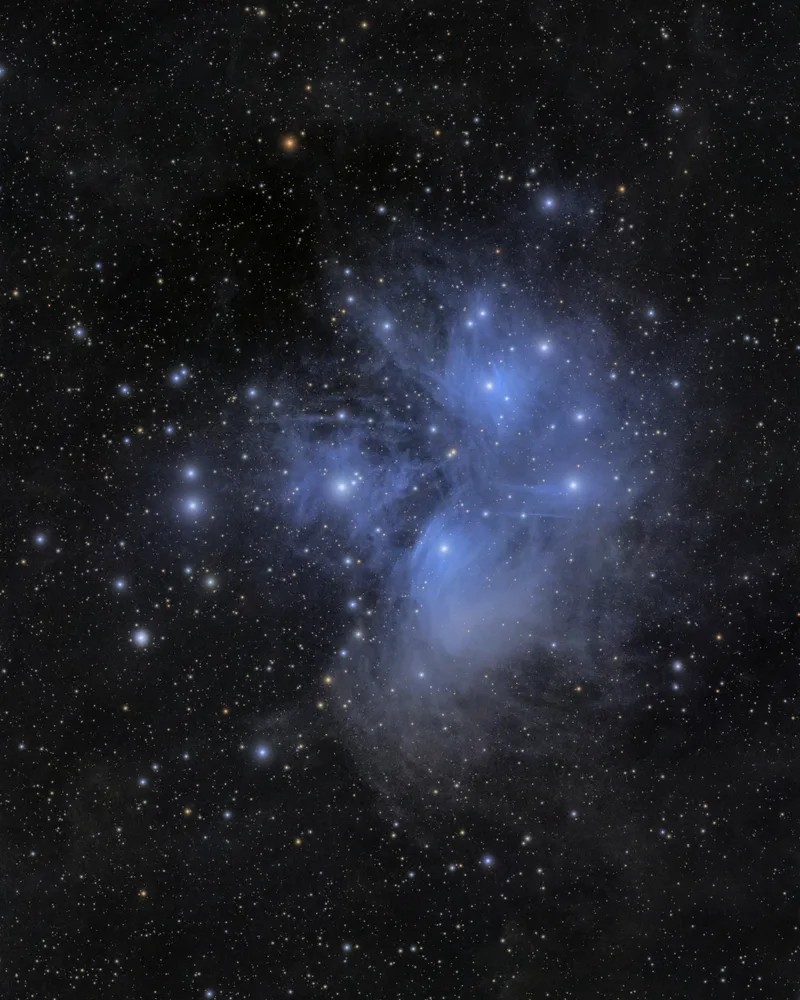
Star cluster & reflection nebula
The Pleiades
440 light years · Light left around 1586
A nearby family of stars illuminates passing dust. Its blue haze is scattered starlight.
Open the photograph →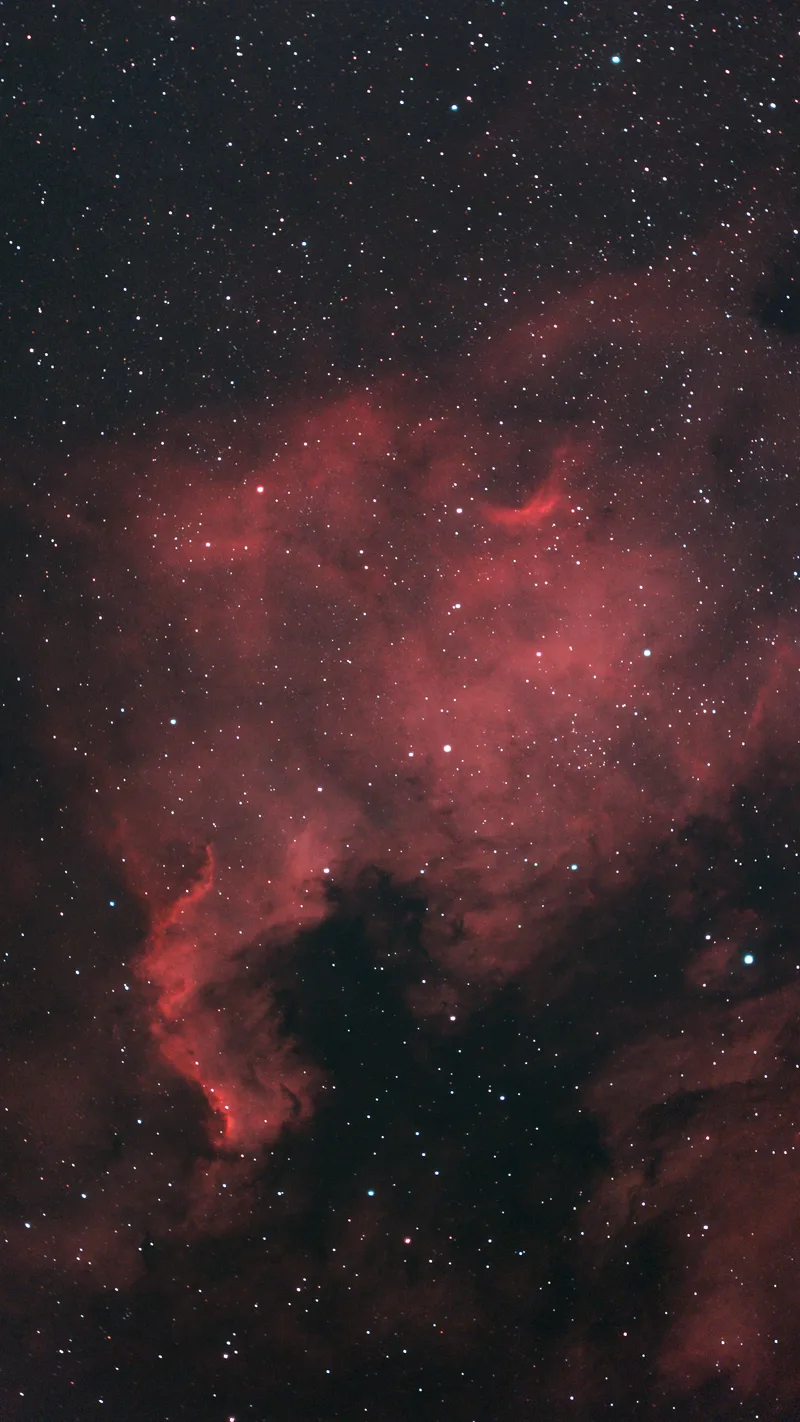
Emission nebula
North America Nebula
1,800 light years · Light left around 226
Glowing gas and obscuring dust draw a familiar outline in Cygnus. The adopted distance is a rounded estimate.
Open the photograph →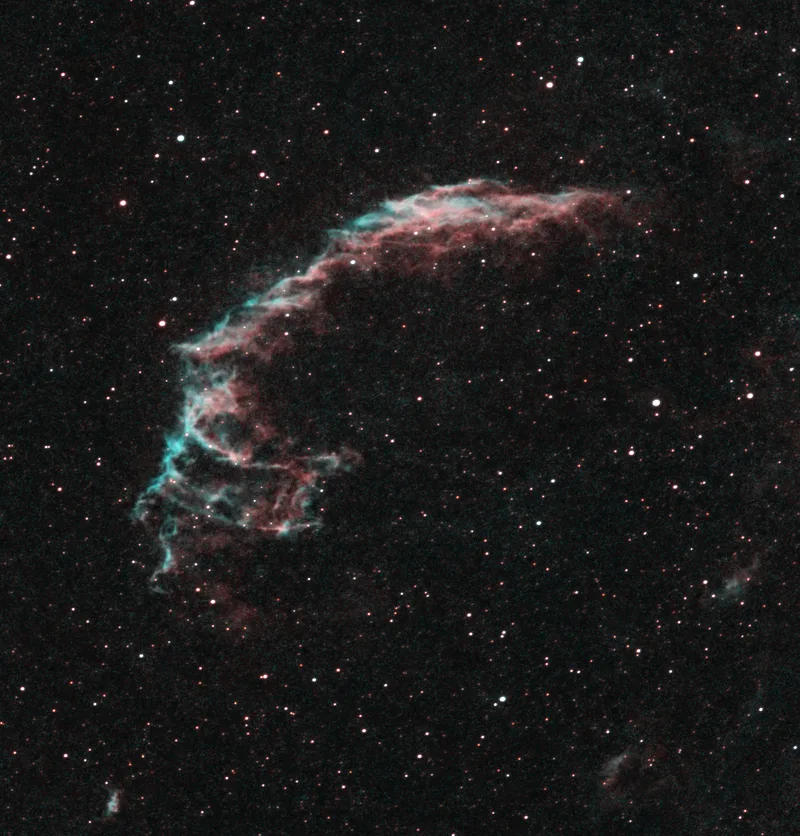
Supernova remnant
Eastern Veil Nebula
2,100 light years · 2,100 years of light travel
Glowing filaments trace a supernova’s surviving shock. The photograph shows the remnant, not the original explosion.
Open the photograph →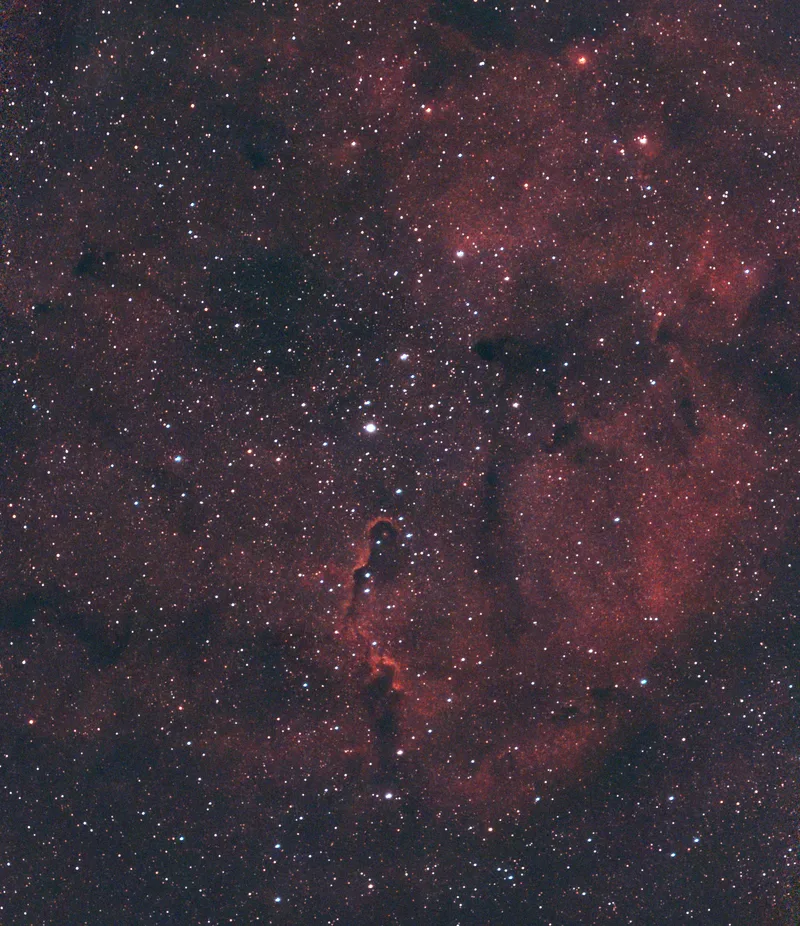
Dark & emission nebula
Elephant’s Trunk Nebula
3,000 light years · 3,000 years of light travel
A dense pillar blocks light inside IC 1396, while the surrounding gas shines. Its distance is an approximate estimate.
Open the photograph →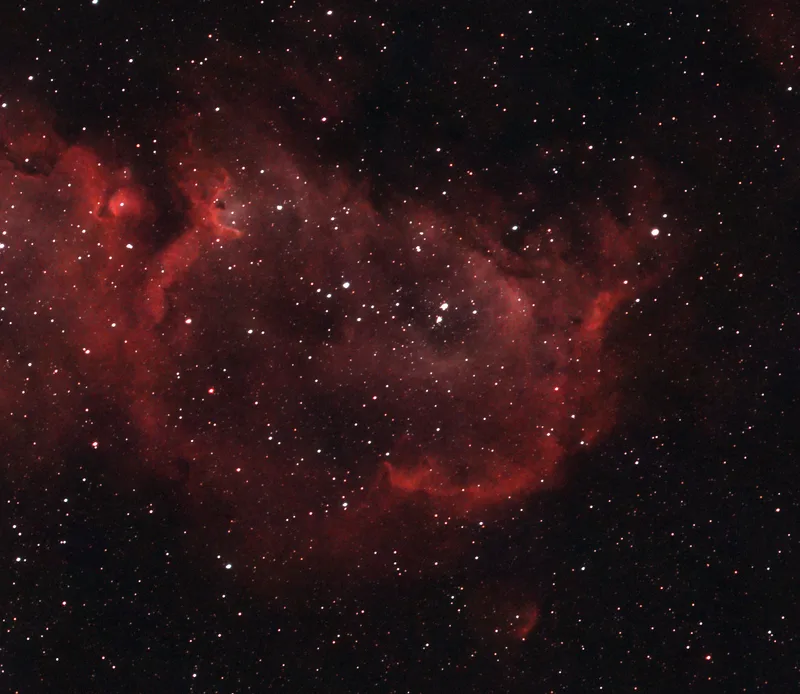
Emission nebula
Soul Nebula
6,500 light years · Light left about 4,500 BCE
Young stars illuminate a broad cloud of gas and dust, inside our own Milky Way.
Open the photograph →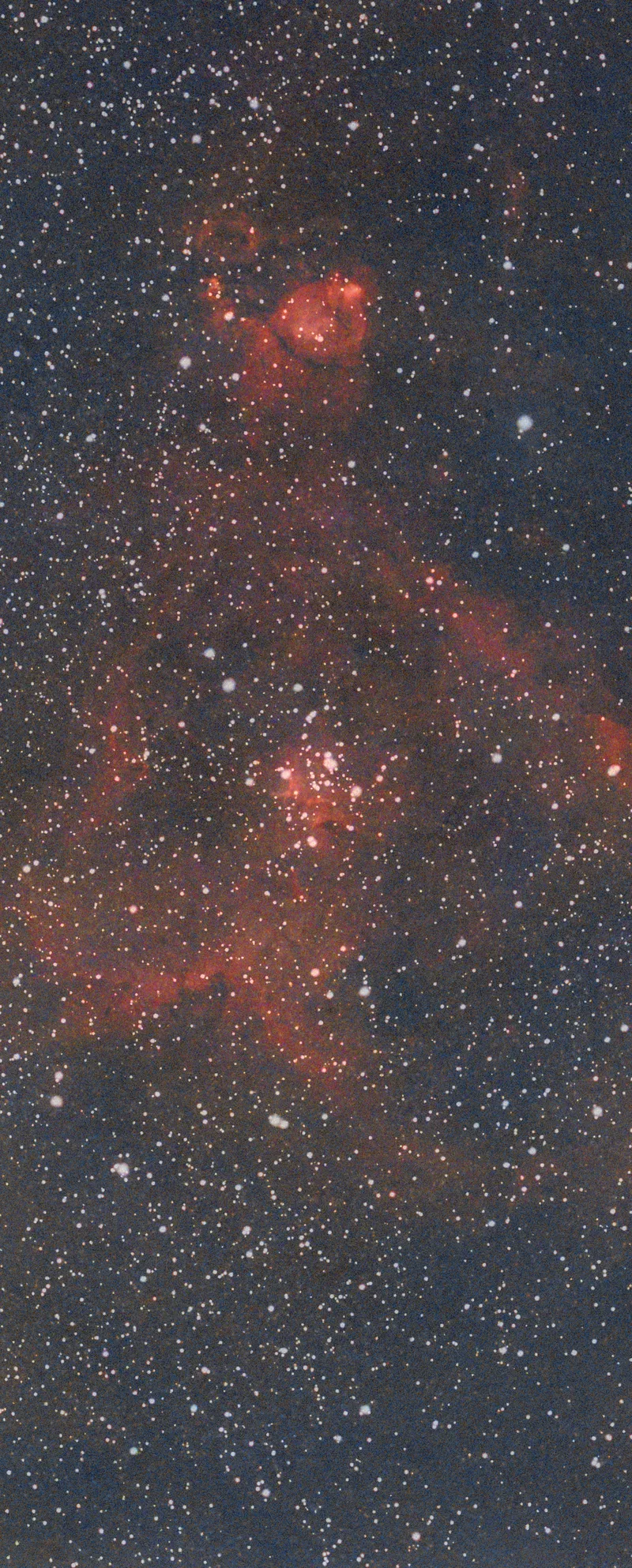
Emission nebula
Heart Nebula
7,500 light years · Light left about 5,500 BCE
This enormous cloud of hydrogen is building new stars inside the Milky Way.
Open the photograph →Landmark
The Milky Way
100,000 light years · 100,000 years of light travel
Our galaxy is about 100,000 light years wide. The Sun and the Heart Nebula are both inside it.
Spiral galaxy
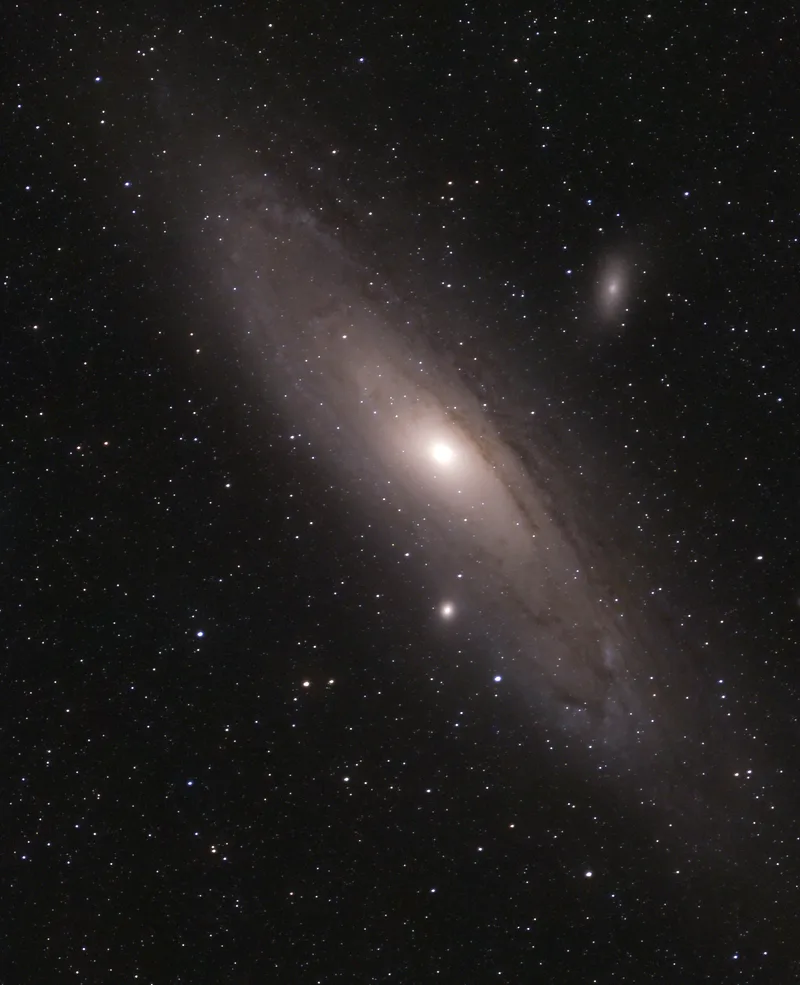
Andromeda Galaxy
2.5 million light years · Light left about 2.5 million years ago
This photograph is ancient light from the nearest large galaxy to our own.
Open the photograph →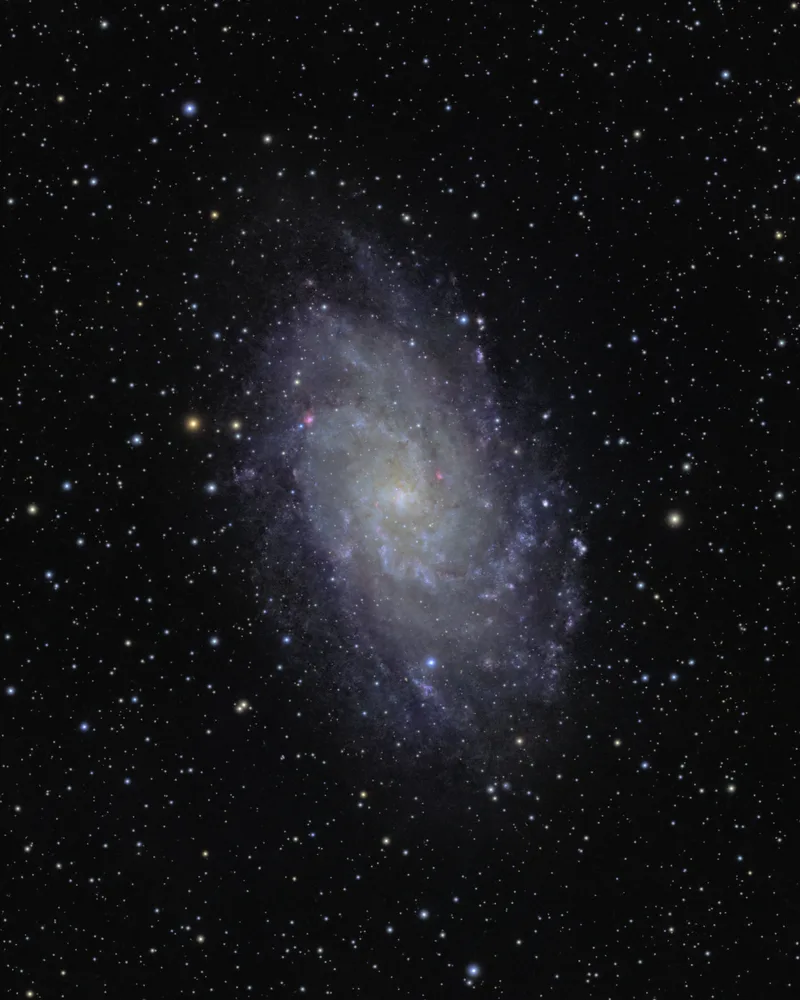
Spiral galaxy
Triangulum Galaxy
3 million light years · Light left about 3 million years ago
Beyond Andromeda, the light from this nearby spiral has travelled for about three million years.
Open the photograph →